1. The Scene: Your First Glance at the Grid
Picture this: You are sitting at a wooden desk with a steaming cup of tea. Spread out before you is a printed sheet of paper featuring a three-by-three square grid. Inside each cell of this grid sits a bewildering cluster of Chinese characters, trigrams, numbers, element labels, and strange titles like “Grass Star”, “Surging Snake”, and “Obstruct Door”. To an untrained eye, it looks like a sudoku grid that lost a fight with a celestial zodiac, or perhaps a stock market ticker written in ancient mystical shorthand.
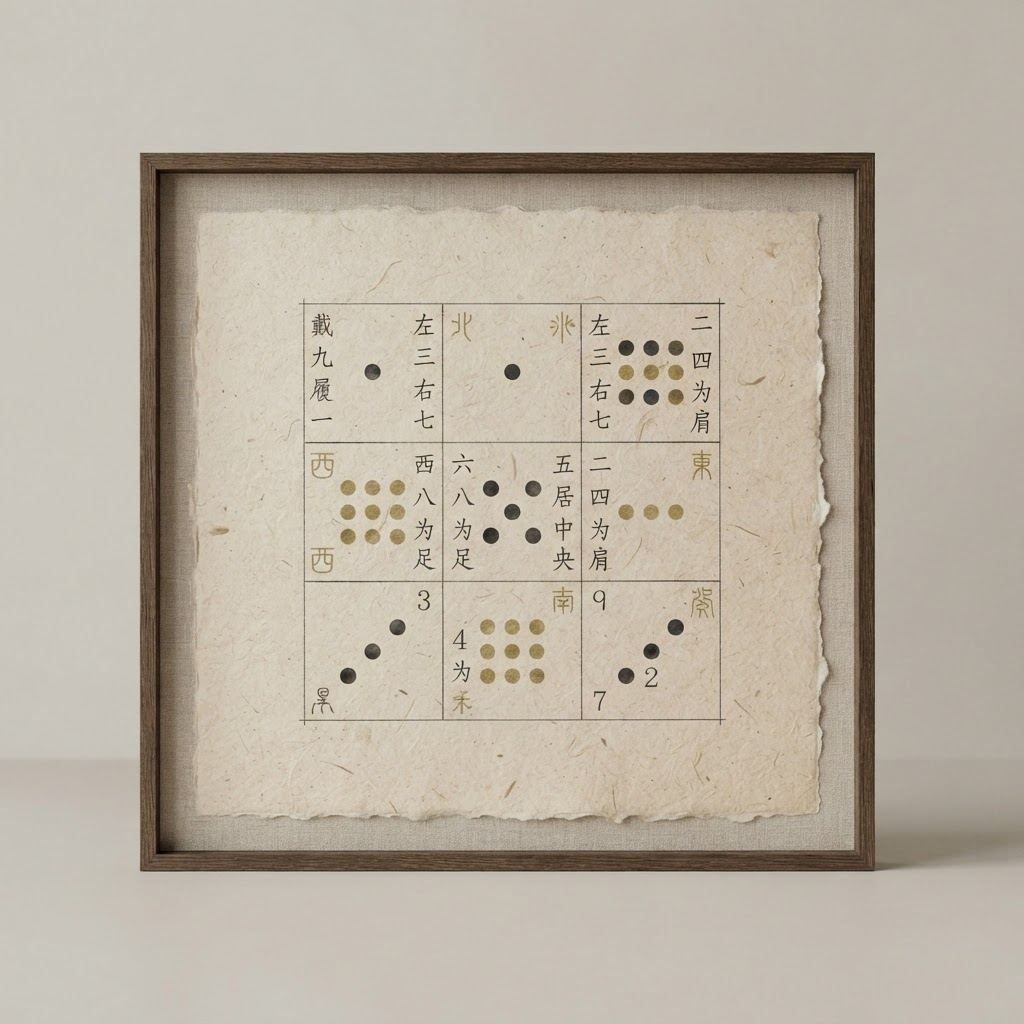
You scratch your head. You came looking for clear answers about whether to launch your new business venture, accept a job offer in another city, or renegotiate a contract with a problematic supplier. Instead, you are staring at a cosmic matrix that seems to speak in riddles. Welcome to the world of Qi Men Dun Jia (奇门遁甲).
[Constructed Character: Uncle Tan, a retired shipping logistics manager in Singapore who uses Qimen to negotiate warehouse leases and evaluate potential business partners]
Uncle Tan remembers his very first exposure to a Qimen chart thirty years ago. He was sitting in a humid coffee shop near the Pasir Panjang shipping terminal, trying to decide whether to commit his life savings into a small fleet of cargo trucks. A veteran practitioner handed him a hand-drawn Qimen chart on grid paper, pointed to a box in the South labeled Li 9 Palace, and remarked dryly: “The Bright Star is burning hot, but the Rest Door is closed, and the Black Tortoise is lurking in the shadows. If you sign this lease today, your capital will vanish like steam over boiling water.” Uncle Tan walked away, skeptical of what felt like esoteric jargon. Three months later, the logistics firm he almost partnered with made front-page news after filing for liquidation due to systematic accounting fraud. From that afternoon onward, Uncle Tan realized that Qimen was not vague horoscope fluff. It was a rigorous, cold-blooded system of spatial-temporal warfare intelligence and pragmatic risk management.
For logistics professionals like Uncle Tan, Qimen feels surprisingly familiar. Supply chain management is all about routing assets across space and time while avoiding bottlenecks, weather disruptions, and untrustworthy vendors. Qimen performs the exact same function, except its routing map covers the invisible energetic conditions governing human interactions.
What Qi Men Dun Jia Actually Is
Strip away the centuries of folkloric superstition and cinematic exaggeration, and Qi Men Dun Jia is fundamentally an ancient Chinese system of environmental and temporal warfare intelligence. Developed over two thousand years ago during the Warring States period and refined through the Han, Tang, Song, and Ming dynasties, Qimen was originally reserved exclusively for imperial military strategists, battle commanders, and emperors. Famous strategists like Zhuge Liang of the Three Kingdoms era and Liu Bowen of the Ming Dynasty relied on these exact calculation frameworks to time military ambushes, deploy troops along favorable geographic terrain, predict atmospheric changes, and engineer strategic turnarounds.
The legendary history of Qimen traces back to the battle of Zhuolu, where the Yellow Emperor (Huangdi) fought against the tribal warlord Chiyou. According to classical lore, the Lady of Nine Heavens (Xuan Nv) bestowed the divine strategic framework upon the Yellow Emperor to cut through Chiyou’s unnatural battlefield mists. Originally, the system contained 4,320 chart layouts. Over centuries of military simplification, the imperial advisor Feng Hou condensed these into 1,080 structures. Later during the Zhou Dynasty, Jiang Ziya streamlined them to 72, and finally Zhang Liang of the Han Dynasty consolidated the framework into the 18 core structures (9 Yang Dun and 9 Yin Dun) utilized today.
The name itself translates directly into its tactical blueprint:
- Qi (奇 – The Mystics): Refers to the Three Mystics (San Qi), represented by the Heavenly Stems Yi (乙 – Yin Wood), Bing (丙 – Yang Fire), and Ding (丁 – Yin Fire). These three stems represent your most potent tactical assets, noble helpers, specialized tools, and strategic breakthroughs.
- Men (门 – The Doors): Refers to the Eight Doors (Ba Men), which represent human actions, operational pathways, physical entry/exit points, commercial channels, and human attitudes.
- Dun (遁 – Concealment / Escaping): Means to hide, disguise, retreat strategically, or remain undetected until the moment of execution.
- Jia (甲 – The Hidden Leader): Represents the supreme commander, the emperor, or the primary asset (Yang Wood). In any strategic engagement, the leader is vulnerable to attack by Geng (庚 – Yang Metal). Because Metal chops Wood, Jia is in constant danger. Therefore, Jia stays concealed behind six protective banners known as the Six Instruments (Liu Yi: Wu, Ji, Geng, Xin, Ren, Gui).
When you combine these four concepts, Qi Men Dun Jia literally means “Hiding the General Behind the Three Mystics and Eight Operational Doors.” It is a dynamic, multi-layered model of time, space, and human behavior designed to help you locate the path of highest probability and lowest resistance in any competitive human scenario.
2. The Cosmic Mechanics: How the Chart Is Constructed
To understand how a Qimen chart works, you must first understand that it is not a static fortune-telling card deck. It is a calculated snapshot of environmental, human, and astronomical energies aligned at a specific slice of time. Think of it as an ancient radar display that tracks four distinct layers of reality as they rotate past one another.
The Solar Terms and the 5-3 Structure
At the heart of Qimen chart construction lies the Chinese Solar Calendar (Jie Qi – 24 Solar Terms). Unlike the lunar calendar which follows moon phases, Qimen is strictly driven by solar movement and Earth’s axial progression relative to the sun. The solar year is divided into 24 Solar Terms of roughly 15 days each, starting with Lichun (Beginning of Spring) and moving through Dongzhi (Winter Solstice) and Xiazhi (Summer Solstice).
Every single Solar Term of 15 days is subdivided into three distinct five-day periods known as Yuan (元):
- Upper Yuan (上元): The first 5 days (60 double-hours) of the solar term.
- Middle Yuan (中元): The middle 5 days (60 double-hours) of the solar term.
- Lower Yuan (下元): The final 5 days (60 double-hours) of the solar term.
Because each day consists of 12 traditional Chinese double-hours (represented by the 12 Earthly Branches: Zi, Chou, Yin, Mao, Chen, Si, Wu, Wei, Shen, You, Xu, Hai), a 5-day Yuan contains exactly 60 double-hours. This corresponds perfectly to one full 60-Jiazi sexagenary cycle. Thus, every five days, the cosmic clock resets its stem-branch rotation.
Yang Dun vs Yin Dun
The cosmic balance shifts twice a year, creating two main seasonal operational phases:
- Yang Dun (阳遁 – Yang Structure): Begins at the Winter Solstice (Dongzhi) and lasts until the Summer Solstice. During this half of the year, solar energy is growing and expanding. Numbers progress forward across the Nine Palaces in ascending order (Ju 1, Ju 2, Ju 3, up to Ju 9).
- Yin Dun (阴遁 – Yin Structure): Begins at the Summer Solstice (Xiazhi) and lasts until the Winter Solstice. During this half of the year, solar energy is contracting and receding. Numbers progress backward across the Nine Palaces in descending order (Ju 9, Ju 8, Ju 7, down to Ju 1).
There are 9 Yang Dun structures and 9 Yin Dun structures, creating a total of 18 fundamental Ju (局 – Chart Structures). When you overlay these 18 structures with the 60 double-hour combinations, you arrive at 1,080 unique chart variations. Modern computer algorithms calculate these charts instantly, but understanding the underlying 5-3 solar math ensures you respect the precision behind the layout.
Plotting Methods: Chai Bu vs Zhi Run
Beginners who use different digital chart plotters sometimes notice that two apps generate slightly different chart numbers for the exact same date and time. This occurs because classical Qimen practitioners historically utilized two main methods for aligning solar terms with the 60-Jiazi calendar:
- Chai Bu Method (拆补法 – Splitting and Patching): The most widely adopted modern calculation method. It strictly adheres to the exact astronomical solar term entry hour, immediately switching the Ju structure the moment the sun enters a new solar term phase.
- Zhi Run Method (置闰法 – Intercalary Method): An older classical calculation method that adds extra intercalary days (doubling a Yuan) every few years to keep the 60-day cycles aligned with physical solar term boundaries.
While both methods have historical legitimacy, the Chai Bu method is favored by over 90% of contemporary corporate and personal Qimen analysts due to its mathematical consistency and direct alignment with real-time astronomical data.
The Four Pillars of Time and the Lead Roles
To plot a Qimen chart for a specific query, you convert the exact year, month, day, and hour into the Four Pillars of Destiny (Sexagenary Stems and Branches). Among these four pillars, the Hour Pillar acts as the primary ignition switch for divine forecasting.
From the Hour Pillar and the active Ju structure, two crucial operational commanders are calculated:
- The Lead Star (Fu Shou 星 – 直符星): The star that resides in the original home palace where the hidden leader Jia (甲) is stationed during that ten-day period (Xun). The Lead Star acts as the high-level celestial commander for that hour.
- The Lead Door (Zhi Shi 门 – 直使门): The door that resides in the original home palace of Jia during that ten-day period. The Lead Door acts as the chief operational execution officer on the human plane.
As time moves, the Heaven Plate rotates, moving the Lead Star to the location of the Hour Stem on the Earth Plate, while the Lead Door moves across the palaces according to the count of the double-hour branch. This movement sets the entire chart in motion, creating a unique pattern of alignments across all nine palaces.
3. The Nine Palaces (九宫): The Fixed Spatial Foundation
Before you can analyze moving stars, rotating doors, or roving deities, you must master the terrain upon which they dance. That terrain is the Nine Palaces (Jiu Gong – 九宫), arranged according to the ancient Luoshu (洛书) square layout.
The Luoshu legend tells of a sacred turtle that emerged from the Luo River during the reign of Yu the Great. On its carapace were marked clusters of dots corresponding to the numbers 1 through 9. No matter which direction you add the numbers across rows, columns, or diagonals, they always sum to 15. In Qimen Dun Jia, this 3×3 grid forms the unshakeable geographical and directional template of the universe.
A Detailed Tour of the Nine Fixed Palaces
Each palace possesses a fixed home position, an inherent Five-Element attribute, an associated Bagua trigram, a cardinal direction, a body part mapping, a corporate department mapping, and a family archetype:
- Kan 1 Palace (坎一宫 – North): Fixed Element: Water. Trigram: Kan. Represents deep water, winter, wisdom, danger, hidden thoughts, kidneys, bladder, liquidity, market flow, research departments, and the middle son. Kan is fluid, cool, secretive, and deep.
- Kun 2 Palace (坤二宫 – Southwest): Fixed Element: Earth. Trigram: Kun. Represents receptive earth, late summer, mother, stomach, abdomen, physical assets, warehouses, land holdings, human resource departments, passive support, and steady nourishment. Kun is slow, receptive, and enduring.
- Zhen 3 Palace (震三宫 – East): Fixed Element: Wood. Trigram: Zhen. Represents thunder, spring, oldest son, feet, liver, rapid expansion, sudden movement, impulse, frontline sales teams, and energetic breakthroughs. Zhen is loud, fast, and proactive.
- Xun 4 Palace (巽四宫 – Southeast): Fixed Element: Wood. Trigram: Xun. Represents wind, late spring, oldest daughter, thighs, gallbladder, trade, flexibility, rumors, reputation, commercial communications, and public relations. Xun is adaptable, persistent, and widespread.
- Center 5 Palace (中五宫 – Center): Fixed Element: Earth. Trigram: None (Pivot). Represents the central axis, core command, internal organs, executive suite, and neutral equilibrium. Because Center 5 has no directional perimeter on the outer boundary, in dynamic chart plotting its energies parasitically attach to Kun 2 Palace (in Yang Dun) or Gen 8 Palace (in Yin Dun).
- Qian 6 Palace (乾六宫 – Northwest): Fixed Element: Metal. Trigram: Qian. Represents heaven, late autumn, father, head, lungs, authority, major corporations, board of directors, government bodies, high executive status, and uncompromising discipline. Qian is rigid, noble, and dominant.
- Dui 7 Palace (兑七宫 – West): Fixed Element: Metal. Trigram: Dui. Represents marsh, autumn, youngest daughter, mouth, teeth, respiratory system, verbal arguments, legal disputes, eloquence, customer service, damage, and public speaking. Dui is expressive, sharp, and argumentative.
- Gen 8 Palace (艮八宫 – Northeast): Fixed Element: Earth. Trigram: Gen. Represents mountain, late winter, youngest son, hands, spleen, stillness, stopping, accumulation, barriers, physical real estate, storage facilities, and structural stability. Gen is solid, immovable, and patient.
- Li 9 Palace (离九宫 – South): Fixed Element: Fire. Trigram: Li. Represents fire, summer, middle daughter, eyes, heart, blood, visibility, public exposure, branding, media presence, fame, illumination, and rapid flare-ups. Li is bright, intense, and warm.
Palace Elemental Relationships (Sheng and Ke)
When analyzing a Qimen chart, you must constantly evaluate how the element of a moving element (Star or Door) interacts with the fixed element of the Palace it lands in. These interactions follow the standard Five-Element cycles:
- Production (Sheng – 生): The Palace element produces the Door/Star element (gives support), or the Door/Star element produces the Palace (drains energy into the terrain).
- Control / Clash (Ke – 克): The Door/Star element overcomes the Palace (forced dominance), or the Palace element overcomes the Door/Star (restriction and suppression).
- Harmony (Bi He – 比和): The Door/Star element matches the Palace element (shared strength and mutual support).
Internal vs External Palaces
Understanding spatial positioning requires dividing the Nine Palaces into Internal (Inner) and External (Outer) sectors:
- Internal Palaces (Kan 1, Kun 2, Zhen 3, Xun 4, Center 5): Represent matters close to home, internal business operations, short-term timing, subjective psychological states, domestic affairs, and nearby geographic locations. Actions in internal palaces materialize quickly.
- External Palaces (Qian 6, Dui 7, Gen 8, Li 9): Represent external markets, foreign affairs, long-term timing, objective realities, distant geographic locations, and public perception. Actions in external palaces take longer to materialize and involve outside forces.
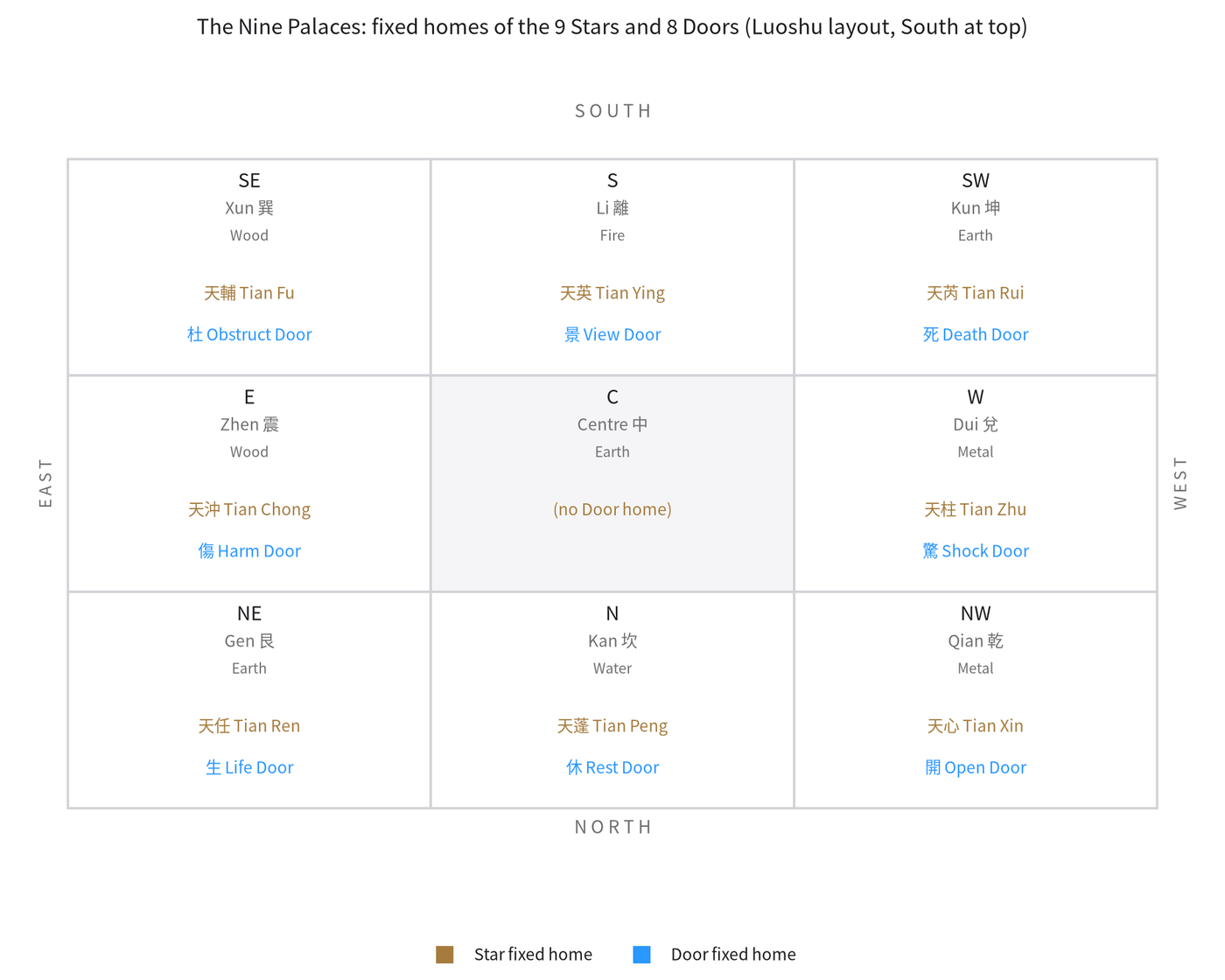
Below is the foundational Nine Palaces reference matrix that every Qimen practitioner must internalize:
Table 1: The Nine Palaces Reference Matrix
| Palace | Trigram | Direction | Element | Season | Family Role | Body Mapping | Domain & Attributes |
|---|---|---|---|---|---|---|---|
| Kan 1 | Kan (☵) | North | Water | Winter | Middle Son | Kidneys, Bladder | Wisdom, secret plans, hidden danger, liquidity, market flow |
| Kun 2 | Kun (☷) | Southwest | Earth | Late Summer | Mother | Stomach, Abdomen | Receptivity, land, physical assets, steady HR support |
| Zhen 3 | Zhen (☳) | East | Spring | Oldest Son | Feet, Liver | Thunder, rapid action, initiative, growth, sales push | |
| Xun 4 | Xun (☴) | Southeast | Late Spring | Oldest Daughter | Thighs, Gallbladder | Wind, commercial trade, reputation, flexibility, PR | |
| Center 5 | Pivot | Center | Earth | Transition | Core Leader | Internal Organs | Central pivot, balance, anchor, parasitic link to Kun 2 / Gen 8 |
| Qian 6 | Qian (☰) | Northwest | Late Autumn | Father | Head, Lungs | Heaven, supreme authority, board of directors, government | |
| Dui 7 | Dui (☱) | West | Autumn | Youngest Daughter | Mouth, Teeth | Marsh, verbal speech, debate, arguments, damage, legal friction | |
| Gen 8 | Gen (☶) | Northeast | Late Winter | Youngest Son | Hands, Spleen | Mountain, stability, stopping, real estate, patience, blockage | |
| Li 9 | Li (☲) | South | Summer | Middle Daughter | Eyes, Heart | Fire, public visibility, contracts, fame, illumination, branding |
4. The 9 Stars (九星): Celestial Energies & Macro Trends
In the Qimen architecture, the Nine Stars reside on the Heaven Plate (天盘). They represent macro-environmental conditions, astronomical timing, climate, general industry trends, and psychological traits. When you examine a star in a palace, you are assessing the external weather operating over your query. You cannot easily change a star’s nature; you must adapt your strategy to its atmosphere.
Seasonal Strength of Stars (Wang, Xiang, Xiu, Qiu, Si)
A star’s capability to manifest its energy depends directly on the active season (the Month Branch):
- Prosperous (Wang – 旺): The star’s element matches the active season (e.g., Water Star Tian Peng in Winter). Energy is at 100% capacity.
- Strong (Xiang – 相): The season produces the star’s element (e.g., Metal season in Autumn producing Water Star Tian Peng). Energy is growing and strong.
- Trapped / Resting (Xiu – 休): The star’s element produces the season’s element (e.g., Water Star in Spring, draining into Wood). Energy is resting.
- Imprisoned (Qiu – 囚): The star’s element controls the season’s element (e.g., Water Star in Summer Fire). Energy is restricted.
- Dead (Si – 死): The season’s element controls the star’s element (e.g., Earth season in Late Summer controlling Water Star Tian Peng). Energy is inert.
Detailed Walkthrough of the 9 Stars
1. Tian Peng (天蓬星 – Grass Star / Canopy Star)
Original Home: Kan 1 Palace. Element: Water. Nature: Highly Inauspicious (Specialist Utility).
Tian Peng is the star of bold risks, rogue operations, high-stakes speculation, and dark intelligence. It carries the energy of a pirate captain or an aggressive hedge fund manager. In business, Tian Peng points to high-risk ventures, offshore operations, gray-market trading, or aggressive market disruption. In personal matters, it warns of potential theft, financial loss, or secretive underhanded behavior. However, when paired with auspicious doors and stems, Tian Peng provides the audacity needed to pull off daring turnarounds against overwhelming odds.
2. Tian Rui (天芮星 – Grain Star / Problem Star)
Original Home: Kun 2 Palace. Element: Earth. Nature: Inauspicious (Diagnostic Utility).
Tian Rui is fundamentally the star of flaws, physical illness, system bugs, and academic research. In health readings, Tian Rui points directly to disease or physical vulnerability. In business and contract analysis, Tian Rui acts as a relentless auditor, highlighting hidden liabilities, system defects, operational loopholes, or flawed machinery. Its silver lining is education and thorough investigation: Tian Rui represents the diligent student or medical practitioner who meticulously studies a problem until a cure is found.
3. Tian Chong (天冲星 – Impulse Star / Destructive Star)
Original Home: Zhen 3 Palace. Element: Wood. Nature: Moderately Auspicious (High Speed).
Tian Chong embodies the raw, explosive energy of spring thunder. It is the pioneer star of swift action, martial force, blunt directness, and breaking through bottlenecks. Tian Chong does not waste time in committee meetings; it charges forward and smashes obstacles. In business, it favors product launches that need immediate market entry, crisis management, and competitive takeovers. Its primary risk is rashness: Tian Chong often acts before thinking, leading to collateral damage if unguided by strategy.
4. Tian Fu (天辅星 – Assistant Star / Cultural Star)
Original Home: Xun 4 Palace. Element: Wood. Nature: Highly Auspicious.
Tian Fu is the supreme academic and cultural star. It governs education, mentorship, scholarly achievement, refined design, branding, and institutional support. When Tian Fu appears, you are blessed with wise advisors, patient teachers, and favorable public opinion. In corporate strategy, it signifies strong brand equity, intellectual property development, corporate training programs, and harmonious talent retention.
5. Tian Qin (天禽星 – Bird Star / Central Star)
Original Home: Center 5 Palace (attaches to Kun 2 or Gen 8). Element: Earth. Nature: Highly Auspicious.
Tian Qin represents the monarch, central authority, impartiality, unshakeable integrity, and absolute trustworthiness. Because Center 5 is the cosmic pivot, Tian Qin carries no bias. It represents steady leadership, fair mediation, noble character, and reliable central platforms. When Tian Qin aligns with your query, it signals that truth, stability, and high-level official backing are on your side.
6. Tian Xin (天心星 – Heart Star / Executive Star)
Original Home: Qian 6 Palace. Element: Metal. Nature: Highly Auspicious.
Tian Xin is the star of strategic brilliance, executive governance, medical doctors, and master architects. Where Tian Fu represents culture and teaching, Tian Xin represents high command and systemic problem-solving. It governs CEOs, chief strategists, surgeons, policy makers, and institutional leaders. In a reading, Tian Xin indicates sound executive planning, effective medical treatments, structured management, and decisive leadership ability.
7. Tian Zhu (天柱星 – Pillar Star / Debater Star)
Original Home: Dui 7 Palace. Element: Metal. Nature: Inauspicious (Specialist Utility).
Tian Zhu is the star of disruption, vocal debate, destruction of outdated structures, and legal friction. It carries a sharp, critical tongue. In corporate contexts, Tian Zhu appears during tense negotiations, whistleblower reports, public debates, labor disputes, and restructuring phases where old operational pillars must be torn down. In legal queries, it represents fierce cross-examination and vocal litigation.
8. Tian Ren (天任星 – Hero Star / Steadfast Star)
Original Home: Gen 8 Palace. Element: Earth. Nature: Highly Auspicious.
Tian Ren is the star of quiet endurance, reliability, hard physical work, wealth accumulation, and mountain-like stability. It does not boast or seek flash; instead, it steadily builds value over long horizons. In business and investments, Tian Ren signals solid real estate holdings, reliable supply chains, long-term capital compounding, and trustworthy partners who keep their promises even when under immense pressure.
9. Tian Ying (天英星 – Bright Star / Hero Star)
Original Home: Li 9 Palace. Element: Fire. Nature: Neutral / Moderately Auspicious.
Tian Ying represents fame, public exposure, artistic brilliance, marketing flair, and explosive energy. Like a fireworks display, it demands immediate attention and shines brightly for all to see. In business, it is ideal for public relations campaigns, media events, product demonstrations, and brand exposure. However, Tian Ying can also indicate short tempers, superficial illusions, rapid burnout, and vanity without substance.
Table 2: The 9 Stars Reference Matrix
| Star Name | Chinese | Home Palace | Element | Auspiciousness | Core Strategic Profile |
|---|---|---|---|---|---|
| Tian Peng | 天蓬星 | Kan 1 | Water | Inauspicious | High risk, speculative trades, bold rogue moves, offshore ventures |
| Tian Rui | 天芮星 | Kun 2 | Earth | Inauspicious | Flaws, systemic bugs, physical disease, auditing, academic research |
| Tian Chong | 天冲星 | Zhen 3 | Wood | Auspicious | Thunderous action, swift speed, martial force, breaking bottlenecks |
| Tian Fu | 天辅星 | Xun 4 | Wood | Highly Auspicious | Mentorship, education, branding, culture, intellectual property |
| Tian Qin | 天禽星 | Center 5 | Earth | Highly Auspicious | Central authority, supreme trust, fair balance, noble character |
| Tian Xin | 天心星 | Qian 6 | Metal | Highly Auspicious | Executive leadership, medical mastery, strategy, big picture control |
| Tian Zhu | 天柱星 | Dui 7 | Metal | Inauspicious | Disruption, debate, legal friction, vocal critique, tearing down structures |
| Tian Ren | 天任星 | Gen 8 | Earth | Highly Auspicious | Endurance, wealth accumulation, real estate, dependable execution |
| Tian Ying | 天英星 | Li 9 | Fire | Neutral / Auspicious | Fame, publicity, marketing, aesthetic flash, quick tempers, high exposure |
5. The 8 Doors (八门): Human Action & Operational Pathways
If the 9 Stars represent the celestial weather above, the 8 Doors (Ba Men – 八门) occupy the Human Plate (人盘). The Doors represent operational pathways, human actions, physical doors of opportunity, strategic decisions, and emotional responses. In Qimen reading, the Door is often the single most important factor determining whether a specific human action will succeed or fail.
Always keep in mind that in authentic Qimen study, these operational portals are exclusively designated as Doors rather than any other term.
Door and Palace Interactions (Men-Gong Dynamics)
When evaluating how a Door behaves in a reading, you must assess its elemental relationship with the Palace it currently occupies:
- Door Forces Palace (Men Ke Gong – 门克宫): The Door’s element overcomes the Palace’s element. Known as “Forced Action”. The human effort is aggressive and forces the environment to comply, causing strain.
- Palace Restricts Door (Gong Ke Men – 宫克门): The Palace’s element overcomes the Door’s element. Known as “Restricted Portal”. Environmental conditions block human initiative; progress requires heavy effort.
- Door Produces Palace (Men Sheng Gong – 门生宫): Human actions nourish the terrain. Effort generates long-term assets and good reputation.
- Palace Produces Door (Gong Sheng Men – 宫生门): The terrain actively supports human initiative. Opportunities land smoothly in your lap.
Detailed Walkthrough of the 8 Doors
1. Open Door (开门 – Kai Men)
Original Home: Qian 6 Palace. Element: Metal. Nature: Highly Auspicious.
The Open Door is the supreme portal for career advancement, business creation, public launches, legal entity formation, and transparent communication. When the Open Door is active, channels are clear, obstacles dissolve, and official authorization is easily obtained. It favors starting a company, opening a retail store, launching a software product, hiring new staff, or initiating formal negotiations.
2. Rest Door (休门 – Xiu Men)
Original Home: Kan 1 Palace. Element: Water. Nature: Highly Auspicious.
The Rest Door governs recuperation, leisure, peaceful negotiations, diplomatic resolution, harmony, and relationship building. It is not a door for aggressive frontline expansion; rather, it is the portal for gathering strength, building alliances behind the scenes, resolving interpersonal conflicts, taking vacations, and engaging in peaceful trade. In health matters, it indicates full recovery and mental peace.
3. Life Door (生门 – Sheng Men)
Original Home: Gen 8 Palace. Element: Earth. Nature: Highly Auspicious.
The Life Door is the absolute champion of commercial profit, capital growth, real estate accumulation, business viability, and vitality. If your query involves making money, buying property, generating cash flow, or evaluating business ROI, you want to see a vibrant Life Door. It represents commercial life blood, active customer acquisition, and expanding asset values.
4. Harm Door (伤门 – Shang Men)
Original Home: Zhen 3 Palace. Element: Wood. Nature: Inauspicious (Specialist Utility).
The Harm Door represents physical injury, vehicle collisions, aggressive confrontation, debt collection, competitive athletics, and litigation. In conventional matters, it warns of damage, bodily pain, or financial loss. However, for law enforcement, debt recovery agents, competitive athletes, and litigation attorneys, the Harm Door provides the fierce, piercing energy required to capture fugitives, collect overdue debts, or win aggressive lawsuits.
5. Obstruct Door (杜门 – Du Men)
Original Home: Xun 4 Palace. Element: Wood. Nature: Neutral / Inauspicious (Specialist Utility).
The Obstruct Door represents blockades, technical secrecy, hiding, non-disclosure agreements, security protocols, and military defense. When Obstruct Door lands in your focus palace, communications stall, progress hits a brick wall, and doors close. However, it is ideal for stealth operations, scientific research, patent protection, software encryption, and going into deep focus mode away from public scrutiny.
6. View Door (景门 – Jing Men)
Original Home: Li 9 Palace. Element: Fire. Nature: Neutral / Moderately Auspicious.
The View Door governs marketing, PR campaigns, artistic presentations, legal contracts, written proposals, beauty, and public visibility. It is the door of visual allure. In business, it favors launch parties, advertising, formal proposals, and contract drafting. The caution with View Door is that it can represent surface appearance without underlying substance, or legal paperwork that looks gorgeous on paper but contains tricky fine print.
7. Death Door (死门 – Si Men)
Original Home: Kun 2 Palace. Element: Earth. Nature: Highly Inauspicious.
The Death Door represents stagnation, final endings, liquidation, stubborn rigid mindsets, land assets, and surgical procedures. In general queries, Death Door signals dead ends, cancelled contracts, severe emotional depression, or unyielding stubbornness from counterparties. However, in real estate acquisition, Death Door points directly to vacant land or distressed properties, and in medical emergencies, it governs surgical excision of damaged tissue.
8. Shock Door (惊门 – Jing Men)
Original Home: Dui 7 Palace. Element: Metal. Nature: Inauspicious.
The Shock Door governs anxiety, fear, unexpected alarms, legal disputes, oral arguments, sales pitches, and vocal disruption. When Shock Door is active, expect sudden surprises, stressful phone calls, public commotion, or emotional distress. In business, it represents high-pressure sales tactics, tense cross-examinations, or alarming news that shakes confidence.
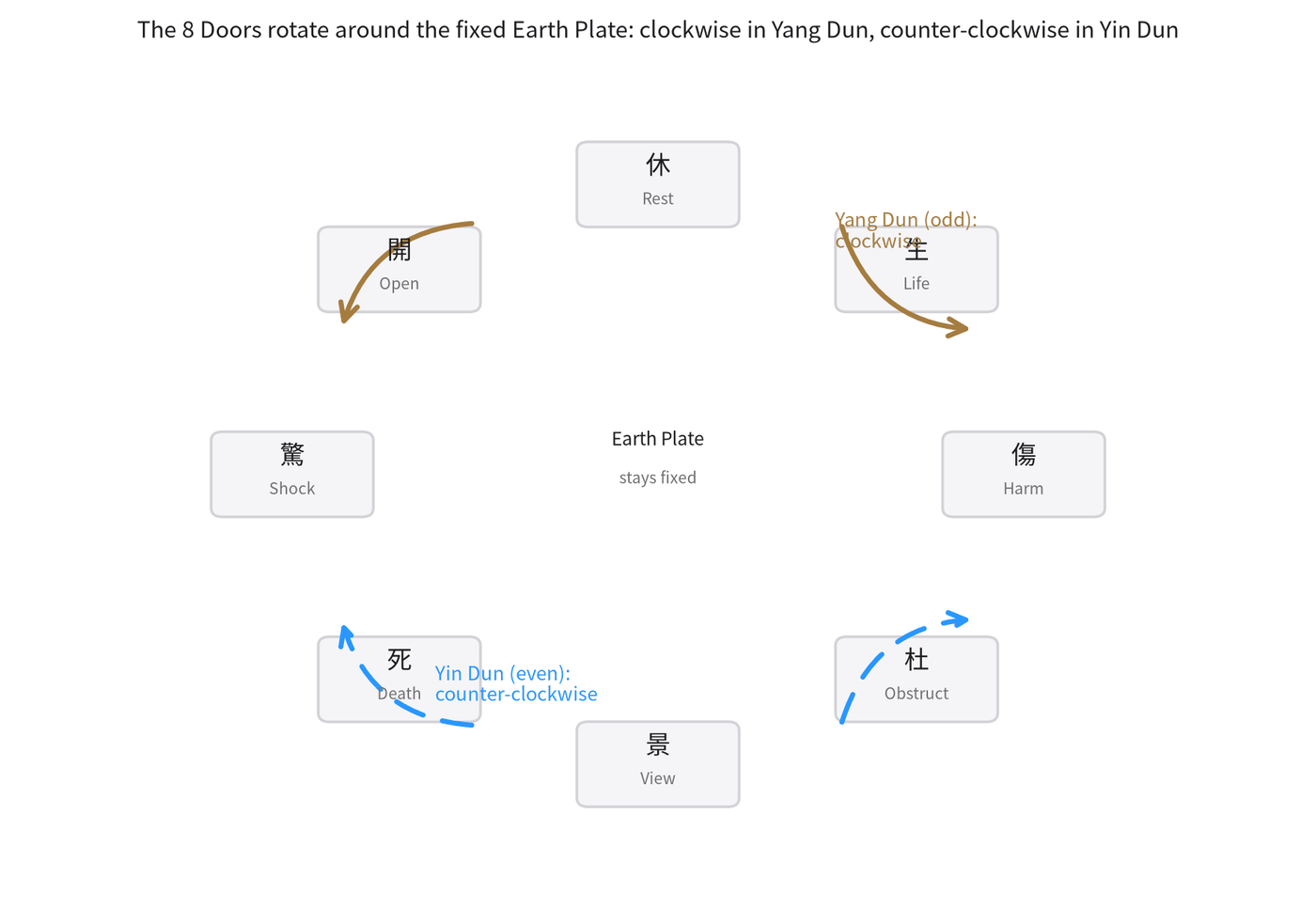
Table 3: The 8 Doors Reference Matrix
| Door Name | Chinese | Home Palace | Element | Auspiciousness | Operational Domain & Applications |
|---|---|---|---|---|---|
| Open Door | 开门 | Qian 6 | Metal | Highly Auspicious | Career moves, business entity launch, official permits, transparency |
| Rest Door | 休门 | Kan 1 | Water | Highly Auspicious | Recuperation, networking, diplomatic truce, harmony, peaceful trade |
| Life Door | 生门 | Gen 8 | Earth | Highly Auspicious | Profit generation, cash flow, real estate growth, commercial viability |
| Harm Door | 伤门 | Zhen 3 | Wood | Inauspicious | Debt collection, physical injuries, lawsuits, aggressive competition |
| Obstruct Door | 杜门 | Xun 4 | Wood | Neutral / Inauspicious | Secrecy, technical R&D, patent protection, blockades, hiding assets |
| View Door | 景门 | Li 9 | Fire | Neutral / Auspicious | Marketing, legal paperwork, advertising, PR, high visual exposure |
| Death Door | 死门 | Kun 2 | Earth | Inauspicious | Endings, liquidation, vacant land, extreme stubbornness, surgery |
| Shock Door | 惊门 | Dui 7 | Metal | Inauspicious | Anxiety, sudden alarms, legal disputes, high-pressure sales, fear |
6. The 8 Deities (八神): Unseen Influences & Unconscious Dynamics
The Eight Deities (Ba Shen – 八神) operate on the supreme Spirit Plate (神盘). They represent unseen environmental forces, psychological atmospheres, subtle subconscious drivers, synchronicities, and overarching luck factors. Deities do not possess physical form; rather, they shape the psychological weather and hidden momentum surrounding a situation.
Detailed Walkthrough of the 8 Deities
1. Zhi Fu (直符 – The Chief / Commander)
Element: Earth / Wood (Supreme Leader). Nature: Highly Auspicious.
Zhi Fu is the supreme deity in Qimen Dun Jia, representing noble protection, aristocratic assistance, official power, top-tier executive support, and problem resolution. When Zhi Fu is present in your focus palace, hundreds of lesser evils scatter. It indicates that you have the backing of major decision-makers, senior leadership, or unshakeable good fortune.
2. Teng She (螣蛇 – Surging Snake)
Element: Fire. Nature: Inauspicious (Unstable Energy).
Teng She is the deity of sudden shifts, eerie coincidences, deceit, paranoia, insomnia, shifting mindsets, and bizarre twists of fate. When Teng She governs a palace, agreements change overnight, counterparties act erratically, and minor issues morph into weird legal or technical puzzles. It warns against trusting unstable promises.
3. Tai Yin (太阴 – Great Moon)
Element: Metal. Nature: Highly Auspicious (Secret Operations).
Tai Yin governs quiet planning, secret benefactors, covert support, female nobility, internal audit, and backstage coordination. It is the patron spirit of whisper networks, confidential negotiations, and private funding. When Tai Yin is active, keeping your plans quiet yields far greater success than making loud public announcements.
4. Liu He (六合 – Six Harmony)
Element: Wood. Nature: Highly Auspicious (Partnerships).
Liu He is the supreme deity of partnerships, marriage, contractual agreements, mergers, dealmakers, brokers, and team collaboration. It acts as the glue holding disparate parties together. In business queries, Liu He indicates successful joint ventures, smooth real estate closings, and strong team alignment.
5. Bai Hu / Gou Chen (白虎 / 勾陈 – White Tiger / Hook)
Element: Metal (Bai Hu in Yin Dun) / Earth (Gou Chen in Yang Dun). Nature: Fierce / Inauspicious.
Bai Hu (White Tiger) represents raw physical power, sudden violence, traffic accidents, severe financial pressure, physical surgery, and ruthless force. Gou Chen (The Hook) represents chronic litigation, ancient baggage, sticky operational blockades, and stubborn delays. When present, proceed with extreme caution and protect physical and financial safety.
6. Xuan Wu / Zhu Que (玄武 / 朱雀 – Black Tortoise / Vermilion Bird)
Element: Water (Xuan Wu) / Fire (Zhu Que). Nature: Inauspicious (Deceit / Rumors).
Xuan Wu (Black Tortoise) governs financial leaks, theft, fraud, hidden motives, illusions, and systemic corruption. It warns that someone is pulling wool over your eyes. Zhu Que (Vermilion Bird) governs written paperwork errors, slander, rumors, public debate, and legal disputes stemming from reckless speech.
7. Jiu Di (九地 – Nine Earth)
Element: Earth. Nature: Auspicious (Long-Term Stability).
Jiu Di carries the deep, quiet, nurturing energy of the earth’s mantle. It favors long-term wealth accumulation, stealthy defense, patient holding strategies, underground operations, and long-term real estate investments. Jiu Di moves slowly, but its foundations are virtually indestructible.
8. Jiu Tian (九天 – Nine Heaven)
Element: Metal. Nature: Highly Auspicious (Expansion).
Jiu Tian carries the soaring energy of the open sky. It favors high ambition, rapid international expansion, aviation, high-tech innovation, marketing scale, and bold public campaigns. When Jiu Tian is present, think big, aim high, and expand your horizons without fear.
Table 4: The 8 Deities Reference Matrix
| Deity Name | Chinese | Element | Auspiciousness | Psychological & Strategic Influence |
|---|---|---|---|---|
| Zhi Fu | 直符 | Earth / Wood | Highly Auspicious | Supreme noble protection, executive backing, problem resolution |
| Teng She | 螣蛇 | Fire | Inauspicious | Erratic twists, deceit, paranoia, sudden shifts, bizarre complications |
| Tai Yin | 太阴 | Metal | Highly Auspicious | Secret support, covert strategy, female benefactors, private funding |
| Liu He | 六合 | Wood | Highly Auspicious | Partnerships, contract agreements, marriage, brokers, team synergy |
| Bai Hu / Gou Chen | 白虎 / 勾陈 | Metal / Earth | Inauspicious | Raw force, fierce pressure, accidents, surgical operations, sticky delays |
| Xuan Wu / Zhu Que | 玄武 / 朱雀 | Water / Fire | Inauspicious | Financial fraud, theft, hidden leaks, slander, legal paperwork errors |
| Jiu Di | 九地 | Earth | Auspicious | Long-term stability, patient foundation, deep holding, stealthy defense |
| Jiu Tian | 九天 | Metal | Highly Auspicious | Rapid expansion, global reach, aviation, high ambition, public momentum |
7. Heaven & Earth Plates, Heavenly Stems & Classic Stem Formations
Every palace in an active Qimen chart contains two Heavenly Stems sitting stacked upon each other. The upper stem sits on the Heaven Plate (天盘干), while the lower stem sits on the Earth Plate (地盘干). Interpreting the relationship between these two stems forms the tactical core of Qimen chart reading.
The Ten Heavenly Stems in Qimen Tactical Terms
The Ten Heavenly Stems are not abstract philosophical symbols; they represent specific physical assets, human roles, and strategic variables:
- Jia (甲 – Yang Wood): The Supreme Leader / Hidden General. Jia never appears openly on the chart. It hides behind one of six banners (The Six Instruments) to protect itself from its deadly adversary, Geng Metal.
- Yi (乙 – Yin Wood): The First Mystic (San Qi). Represents Jia’s younger sister. Yi Wood tames Geng Metal by marrying it (Yi-Geng combination). Governs soft strategy, diplomacy, flexible assets, healthcare providers, and subtle maneuvers.
- Bing (丙 – Yang Fire): The Second Mystic. Represents Jia’s son. Bing Fire attacks Geng Metal directly with fierce heat. Governs aggressive strategy, power, authority, bright breakthroughs, and legal clout.
- Ding (丁 – Yin Fire): The Third Mystic (Star Mystic). Represents Jia’s daughter. Governs specialized strategy, technical innovation, precise execution, glowing opportunities, and fine documents.
- Wu (戊 – Yang Earth): Capital, cash flow, principal investment, major treasury, land assets, financial reserves.
- Ji (己 – Yin Earth): Lowlands, hidden desires, operational clutter, messy logistics, backroom deals, internal doubts.
- Geng (庚 – Yang Metal): The Primary Enemy, ultimate obstacle, fierce competitor, legal injunction, roadblock, physical barrier. In Qimen, Geng is the master key for evaluating challenges.
- Xin (辛 – Yin Metal): Small mistakes, criminal history, jewelry, refined tools, legal flaws, minor debts, structural defects.
- Ren (壬 – Yang Water): Flowing water, major logistics networks, market liquidity, unstable factors, movement, public channels.
- Gui (癸 – Yin Water): Trap, hidden liquid, quiet tears, dark secrets, covert traps, systemic corruption, network bottlenecks.
Classic Stem Combinations (Formations)
When the Heaven Plate Stem overlays the Earth Plate Stem, they create a compound energy field known as a Ge (格 – Stem Formation). Below are major classical formations that every practitioner must recognize instantly:
Auspicious Formations
- Dragon Returns to Palace (青龙返首 – Wu + Yi): Yang Earth on Heaven Plate over Yin Wood on Earth Plate. Represents capital returning with rich returns, grand business turnarounds, and noble financial support.
- Phoenix Flings Wings (飞鸟跌穴 – Bing + Wu): Yang Fire over Yang Earth. Represents sudden unexpected success, free promotions, landing major contracts effortlessly, and effortless prestige.
- Jade Maiden Guarding the Door (玉女守门 – Ding + Lead Door): Yin Fire paired with the active Lead Door. Represents extraordinary assistance from key advisors, perfect timing, and effortless protection during negotiations.
- Three Mystics Flourishing (三奇升殿 – Bing/Ding/Yi + Home Palace): Mystics landing in their natural seasonal or palace homes, maximizing diplomatic and technical breakthroughs.
- Mystic Gains Support (奇仪相佐 – Yi + Ding): Yin Wood over Yin Fire. Represents harmonious technical collaboration where strategic advice transforms into immediate execution.
Inauspicious Formations
- White Tiger Fierce (白虎猖狂 – Xin + Yi): Yin Metal over Yin Wood. Metal destroys Wood. Represents sudden betrayal, severe financial injuries, broken contracts, and forced liquidation.
- Dragon Escapes (青龙逃走 – Yi + Xin): Yin Wood over Yin Metal. Wood flees Metal. Represents loss of key talent, partners backing out, property theft, and chaotic retreats.
- Heavenly Penalty (天刑 – Geng + Ren): Yang Metal over Yang Water. Represents legal lawsuits, regulatory fines, public scandals, and severe institutional punishment.
- Water Extinguishes Torch (太白入荧 – Geng + Bing): Yang Metal over Yang Fire. Represents aggressive competitive takeover, sudden market crash, and hostile interference.
- Small Defect Drains Treasury (Xin + Wu): Yin Metal over Yang Earth. Represents minor operational bugs or hidden legal clauses steadily draining principal capital.
“The Nine Stars lie in the Heavens above, the Eight Doors reside on the Earth below, and the Eight Deities roam in between, weaving the dynamic interactions of Heaven, Earth, and Humanity.”
— Classical Qimen Axiom, Qimen Dunjia Miji (Secret Book of Qi Men Dun Jia)
8. Chart Modifiers: Void (Kong Wang), Horse Star, Fan Yin, and Fu Yin
Even when you have evaluated the Star, Door, Deity, and Stem combination in a palace, your analysis remains incomplete until you check three critical chart modifiers that alter energy delivery.
1. Emptiness / Void (Kong Wang – 空亡)
In Chinese chronometry, ten Heavenly Stems pair with twelve Earthly Branches in ten-day streams (Xun). Because 12 branches exceed 10 stems by two, every ten-day stream leaves two Earthly Branches empty of stem support. This condition is called Kong Wang (Emptiness).
When a palace falls into Void (indicated on modern chart apps by a circle or the label “Kong”):
- The energy of that palace is reduced by 50% to 80%.
- Auspicious doors and stars lose their strength, delivering empty promises or delayed results.
- Inauspicious elements lose their teeth; a scary Death Door or White Tiger in Void cannot inflict its full damage.
- In business readings, Void indicates unfulfilled deals, missing money, ghost clients, or projects that look massive on paper but lack real substance.
- Filling the Void (填实 – Tian Shi): Void is not permanent. When time moves forward and the day or month branch matches the empty branch, the Void gets filled, instantly detonating the stored energy into reality.
2. The Horse Star (Yi Ma – 驿马)
Calculated directly from the double-hour branch, the Horse Star represents dynamic movement, speed, rapid change, travel, and trigger events. When the Horse Star lands in a palace, matters move at lightning speed. It acts as an accelerator: whatever energy exists in that palace will detonate into physical reality much faster than expected.
3. Fu Yin (伏吟) and Fan Yin (反吟)
- Fu Yin (Prostration / Entanglement): Occurs when all Stars, Doors, or Stems remain in their original home palaces or duplicate themselves across Heaven and Earth plates. Represents severe stagnation, inertia, repeat mistakes, and feeling stuck in mud. Strategy: Stay still, hold cash, and wait for the cycle to turn.
- Fan Yin (Reversal / Volatility): Occurs when Stars or Doors rotate 180 degrees directly opposite their home palaces (e.g., Open Door in Li 9 Palace instead of Qian 6). Represents rapid turnover, sudden reversals of decision, volatile market shifts, and extreme drama. Strategy: Act fast, take quick profits, and do not expect long-term stability.
Directional Activation and Strategic Spatial Deployment
A frequently asked topic among corporate strategists who utilize Qimen is how to physically leverage palace directions during crucial business meetings or high-stakes negotiations. In classical Qimen tactical deployment, this technique is known as Spatial Directional Activation (Fa Ding 方定).
When you have identified an exceptionally auspicious palace on your hourly chart, such as a palace containing the Chief Deity (Zhi Fu), Life Door (Sheng Men), and an auspicious Mystic Stem (Yi, Bing, or Ding), you can physically position yourself relative to your counterparty to absorb that palace’s energetic advantage:
- Backing the Auspicious Direction (Zuo Xiang 坐向): Sit or stand such that your back faces the compass direction of the auspicious palace. For example, if Qian 6 Palace (Northwest) holds the Chief Deity and Open Door, position your chair so that your back is turned toward the Northwest while facing Southeast. In classical Qimen military theory, backing an auspicious deity shields your rear flank and projects commanding authority toward your counterparty.
- Facing the Counterparty’s Obstacle Direction: If you know your counterparty is experiencing hesitation or fear, position them so that their back faces a palace containing Shock Door or Black Tortoise. This heightens their internal anxiety and prompts them to seek resolution on your terms.
- Timing Spatial Movement: If you must travel to sign a major contract, submit a visa application, or launch a physical store, initiate your journey from your home or office moving toward the compass direction of the active auspicious palace during the designated double-hour. This aligns your physical trajectory with favorable spatial-temporal momentum.
9. Complete Worked Teaching Example: Step-by-Step Chart Reading
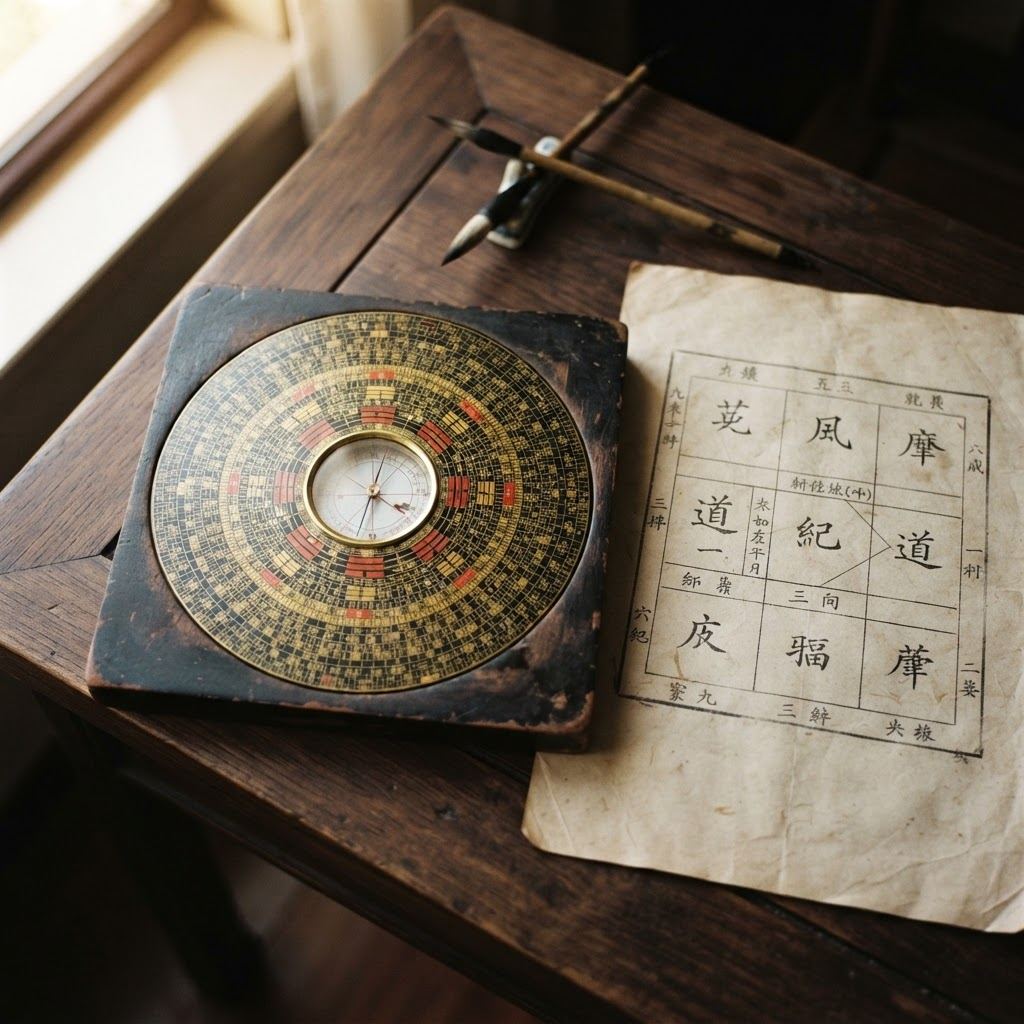
To see how all these moving pieces converge into practical decision-making, let us walk through a real-world case study featuring our recurring character, Uncle Tan.
The Real-World Scenario
It is Wednesday morning, October 14, 2026, at 10:30 AM (Si Hour). Uncle Tan sits in a quiet cafe near the Tanjong Pagar commercial district in Singapore. A flashily dressed tech entrepreneur named Kevin has approached Uncle Tan with an urgent proposal: Kevin wants Uncle Tan to invest $200,000 into a new automated logistics warehouse software platform. Kevin promises that the platform will double Uncle Tan’s investment within twelve months and offers a 30% equity stake if Uncle Tan transfers a $50,000 deposit by 5:00 PM today.
Uncle Tan pulls out his tablet, generates the Qimen chart for the Si Hour (Yang Dun Ju 3), and analyzes the grid.
Step 1: Locate the Key Focal Points
In Qimen business query reading, we establish three mandatory focal palaces:
- The Day Stem (Querent): Represents Uncle Tan (his current strength, state of mind, and position). Day Stem is Yi Wood, located in Gen 8 Palace (Northeast).
- The Hour Stem (Matter / Project): Represents the warehouse software project and Kevin’s proposal. Hour Stem is Gui Water, located in Xun 4 Palace (Southeast).
- Capital & Profitability: Capital is represented by Wu Earth (in Kan 1 Palace). Profit is represented by the Life Door (in Qian 6 Palace). The partnership glue is represented by Liu He Deity (in Xun 4 Palace).
Step 2: Analyze Uncle Tan’s Position (Day Stem – Gen 8 Palace)
In Gen 8 Earth Palace, Uncle Tan’s Day Stem (Yi Wood) sits alongside:
- Star: Tian Ren (Hero Star – Earth). Highly auspicious, dependable, patient, mountain-like endurance.
- Door: Rest Door (Water). Highly auspicious, peaceful, reflective, steady, diplomatic.
- Deity: Zhi Fu (The Chief). Supreme protection and noble authority.
- Stem Combination: Yi Wood over Wu Earth (Dragon Returns to Palace – Auspicious financial return).
Interpretation: Uncle Tan is in a commanding position. He has solid cash reserves, high personal integrity, excellent mental clarity, and supreme noble protection. He is under zero pressure to rush into anything.
Step 3: Analyze Kevin’s Project (Hour Stem – Xun 4 Palace)
In Xun 4 Wood Palace, the Hour Stem (Gui Water) sits alongside:
- Star: Tian Rui (Problem Star – Earth). Inauspicious! Points directly to technical bugs, operational flaws, and hidden liabilities in the software.
- Door: View Door (Fire). Represents high marketing flash, attractive slide decks, but superficial illusion without underlying product substance.
- Deity: Xuan Wu (Black Tortoise / Fraud Deity). Inauspicious! Points to financial leaks, exaggerated metrics, stolen IP, and deceit.
- Stem Combination: Gui Water over Geng Metal (Inauspicious trap and legal blockage).
- Chart Modifier: Xun 4 Palace is in Kong Wang (Emptiness)!
Interpretation: Kevin’s proposal is an absolute minefield. The presence of Tian Rui (Problem Star) confirms the software platform has severe operational defects. View Door shows that Kevin’s impressive pitch deck is pure surface show without underlying technology. Xuan Wu warns of financial fraud or hidden debts. Most crucially, because Xun 4 is in Emptiness (Kong Wang), Kevin’s promised 300% financial returns are 100% fake promises with zero real substance.
Step 4: Check Elemental Interactions and Profitability
Let us look at the element interactions across palaces:
- Uncle Tan’s palace is Gen 8 (Earth). Kevin’s project palace is Xun 4 (Wood). Wood overcomes Earth! This means if Uncle Tan signs this contract, the project will drain and control Uncle Tan’s resources.
- Look at Profit (Life Door in Qian 6 Metal Palace). Qian 6 Metal overcomes Xun 4 Wood (Project), but Qian 6 Metal produces Kan 1 Water and clashes with Xun 4. Additionally, Wu Earth (Capital) in Kan 1 Water Palace suffers a clash from the Hour Branch.
Step 5: The Final Strategic Decision and Subsequent Outcome
Uncle Tan sips his tea, closes his tablet, and looks Kevin straight in the eye. He politely declines the investment offer, refusing to send the $50,000 deposit.
Two months later, news breaks across local business forums: Kevin’s tech startup was audited by regulators for falsifying financial statements and selling software code stolen from another firm. Investors who transferred money lost every cent. By reading the Qimen chart accurately, Uncle Tan saved $200,000 in less than five minutes of analysis.
10. Common Beginner Mistakes (And How to Avoid Them)
When learning Qimen chart reading, beginners frequently slip into predictable analytical traps. Avoid these eight cardinal mistakes to maintain razor-sharp reading accuracy:
1. Reading Deities in Isolation
Beginners often panic when they see White Tiger or Black Tortoise in their focus palace, assuming immediate doom. Deities represent spiritual weather, not final physical outcomes. Always evaluate the Door (Human Action) and the Stem Combination (Tactical Base) first. A White Tiger paired with an Open Door and a strong Life Door simply means high-intensity physical effort is required to capture a huge market win.
2. Fearing Inauspicious Doors Without Understanding Niche Tactics
Every door in Qimen serves a specific tactical purpose. If you are launching a retail storefront, you avoid the Harm Door. But if you are a debt recovery specialist hunting down a delinquent borrower, the Harm Door is your greatest tactical asset. Match the door’s nature to the specific operational objective of your query.
3. Confusing Earth Plate Stems with Heaven Plate Stems
Remember: Heaven Plate Stems (upper stem) represent surface intentions, active efforts, and subjective desires. Earth Plate Stems (lower stem) represent underlying physical realities, historical roots, and objective foundations. If your Heaven Stem is Yi Wood (Mystic) but your Earth Stem sits on Gui Water (Trap), your brilliant surface plan rests on a rotten foundation.
4. Forgetting Emptiness (Kong Wang) Reductions
A palace containing the Chief Deity, Life Door, and Tian Xin Star looks like an effortless jackpot. But if that palace is marked with Void (Kong Wang), its actual real-world delivery is reduced by up to 80%. Failing to check Void leads practitioners to project massive returns on deals that end up producing empty air.
5. Treating Qimen as Passive Fortune-Telling
Qimen is not a passive horoscope that tells you what “will happen” while you sit on the couch. It is a strategic map that reveals probability distributions based on spatial and temporal positioning. If a chart indicates that launching today will trigger legal friction (Shock Door + Geng Metal), you do not throw your hands up in despair; you adjust your launch date, re-draft your contract terms, or switch operational pathways.
6. Re-Casting Charts out of Emotional Anxiety
When beginners receive an unfavorable chart reading, they often clear their screen and cast another chart ten minutes later, hoping for a better layout. This breaks the cosmic sync. The very first chart cast with a clear, focused mind represents the true temporal footprint of the query. Respect the first chart.
7. Ignoring Palace Seasonality and Element Strength
A star or door that is intrinsically auspicious (like Life Door or Tian Fu Star) becomes severely restricted if it lands in a season or palace that smothers its element. Always calculate whether the surrounding terrain nurtures or suppresses the component.
8. Expecting Strategic Realignment Without Physical Action
Qimen provides spatial and temporal intelligence, but intelligence without execution is useless. If a reading identifies an Open Door in the Northwest at 2:00 PM, you must actually initiate the phone call, send the proposal, or open the door at that calculated window.
“When Heaven provides the opportune time, Earth provides the favorable terrain, and Man enters through the correct Door, victory follows as surely as shadow follows form.”
— Imperial Warfare Treatise, Yandun Jufa (Method of Sealing the Smoke)
11. Frequently Asked Questions (FAQ)
Q1: Do I need to memorize all 1,080 chart variations to read Qimen effectively?
No. You do not need to memorize 1,080 individual charts. Modern Qimen software apps and digital plotters construct the exact chart layout instantly. Your job as a practitioner is not manual matrix computation; your job is pattern recognition and strategic interpretation across the Nine Palaces, 9 Stars, 8 Doors, 8 Deities, and Ten Heavenly Stems.
Q2: What should I do if my Day Stem lands in a Palace with a Death Door?
Do not panic. A Death Door in your Day Stem palace simply indicates that your current mindset is overly rigid, stubborn, or focused on an outcome that has reached its natural ending. It instructs you to let go of dead assumptions, liquidate outdated assets, or end an unproductive strategy so you can pivot toward new growth channels.
Q3: How does Qi Men Dun Jia differ from BaZi (Four Pillars of Destiny)?
BaZi is a natal destiny profiling system derived from your exact birth year, month, day, and hour. It maps your lifelong energetic blueprint, personal capacity, wealth potential, and lifetime luck cycles. Qimen Dun Jia is an operational decision-making and forecasting framework that addresses specific situational queries at a precise moment in time. BaZi tells you who you are; Qimen tells you what tactical move to make right now.
Q4: Is true solar time required when casting a Qimen chart?
Yes. Because Qimen is anchored to Earth’s physical alignment with solar energy, using local true solar time (adjusting clock time for your exact longitude) improves chart reading accuracy, particularly for queries occurring close to the boundary between double-hour branches.
Q5: Can Qimen be used for daily personal decision-making, or only major life events?
Qimen scales seamlessly across all levels of human activity. You can use Qimen to time a multi-million-dollar corporate merger, or you can use it to choose the most auspicious time to hold an uncomfortable conversation with a neighbor, submit a job application, or schedule a critical medical appointment.
Q6: What does it mean when the Lead Star and Lead Door both fall into Emptiness (Kong Wang)?
When both the Lead Star ( celestial commander) and Lead Door (human execution officer) fall into Emptiness, it signals a period of systemic uncertainty and delayed execution. Major strategic moves should be paused until the hour or day branch moves out of the Void sector. Use this time for internal audits, stealth planning, and structural preparation.
Q7: What if my chart displays conflicting signals, such as an auspicious Star alongside an inauspicious Door?
Conflicting signals are normal in complex real-world situations. An auspicious Star (good macro weather) paired with an inauspicious Door (challenging operational execution) means the overall market environment is favorable, but your specific tactical execution will require navigating friction or procedural hurdles. Weight the Door higher for short-term operational actions, and weight the Star higher for long-term strategic alignment.
Q8: Can Qi Men Dun Jia be applied to financial markets and stock trading?
Yes. Many institutional and retail traders utilize Qimen to evaluate market sentiment and timing. In financial queries, Wu Earth represents principal capital, Life Door represents profit flow, Tian Peng Star represents speculative risk, and Geng Metal represents market resistance or price crashes.
Q9: How does Qimen interact with Feng Shui environmental audits?
Qimen and Feng Shui share the exact same Nine Palace Luoshu foundation. In environmental Qimen (Feng Shui Qimen), practitioners overlay the hourly or daily Qimen chart onto a physical property floor plan to locate energetic blind spots, identify structural blockages, and time physical renovations for maximum prosperity.
Q10: What is the best way for a complete beginner to start practicing Qimen?
Start by casting a daily chart for your morning focus hour. Identify your Day Stem palace, note the Door and Deity residing there, and observe how your day unfolds. By keeping a daily journal comparing chart layouts with real-world events, your pattern recognition will rapidly sharpen without financial risk.
Where to go next
For the system in one page, start with What is Qi Men Dun Jia, the Singaporean perspective. Once you can read a chart, the next question is who to learn from: the complete guide to the top 10 QMDJ masters covers that honestly. When you want the chart to answer a question, the I Ching casting manual is the older oracle, and when you want the right day instead of the right hour, see the classical date selection field manual. The Nine Stars get their own deep dive in how the nine stars read a chart.
Leave a Reply
You must be logged in to post a comment.